
Closing the Strait of Hormuz, Opening to People Who Question & Listen

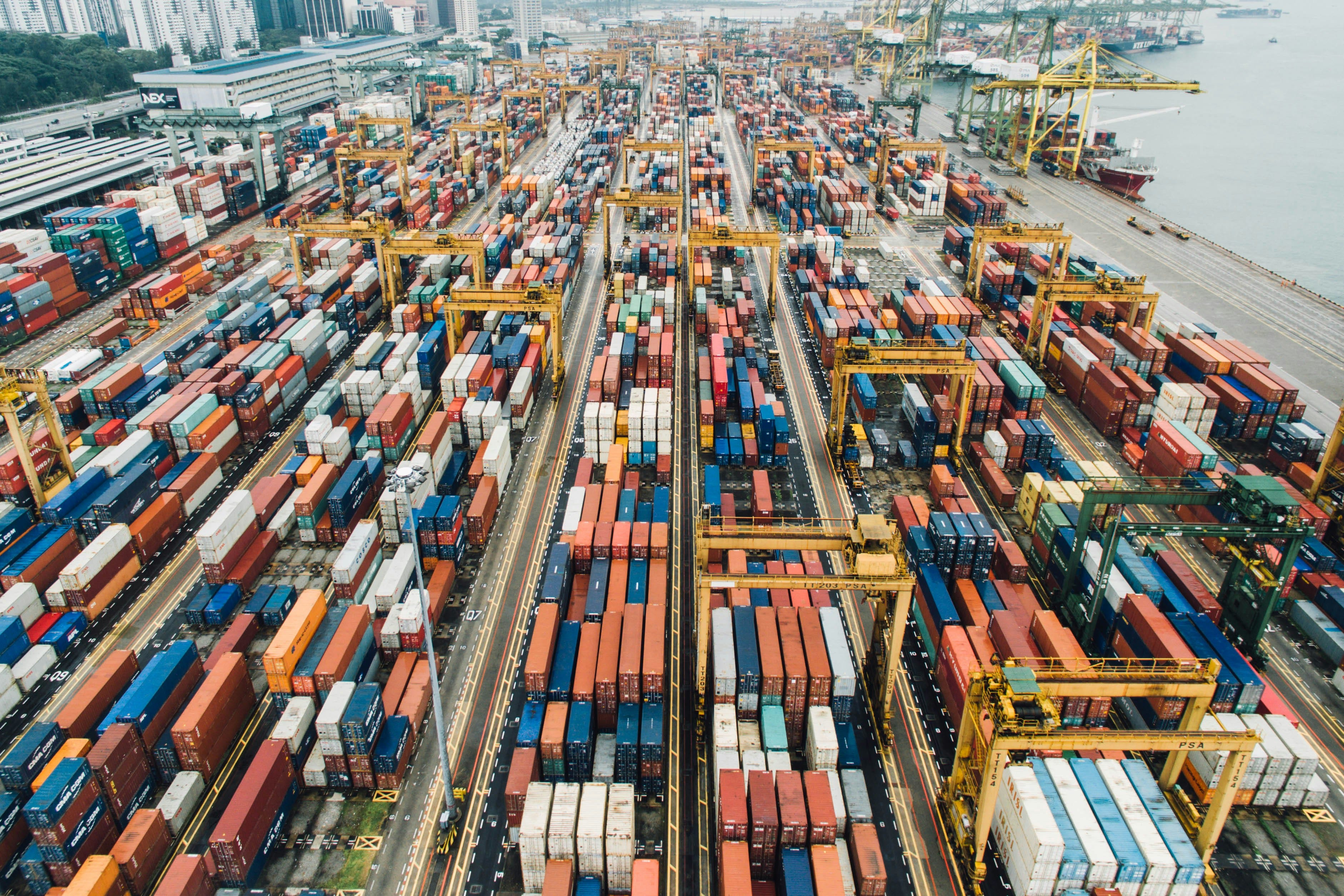
When Iran responded to the U.S. and Israel’s attack by closing the 24-mile-wide Strait of Hormuz (through which about 20% of world oil shipments pass), many people began to notice our dependence on oil and international supply chains. Liquefied natural gas (LNG), crude oil, rubber, tea, sugar, sulfuric acid (an oil by-product needed to make nitrogen fertilizers for mass-produced alfalfa, canola, corn, potatoes, soybeans, wheat and more), plastics, electronics parts and final electronic products…all pass through the Strait of Hormuz.
If anyone aims to expand awareness of modern civilization’s ecological impacts—and reduce them—then we might consider the Strait’s closure a blessing. As Pakistani engineer Ali bin Shahid says, “This…is the most productive policy in modern history. (It) turned out to be a better climate policy than the Paris Agreement, the Kyoto Protocol, and every UNFCCC resolution combined. No compliance framework needed. No carbon tax. Just sea mines.”
Environmentalist Max Wilbert points out that closing the Strait of Hormuz prevents 20 million barrels of oil from being burned per day. “As a person living in an industrialized nation and born into a capitalist society,” he writes, “I get most of my food from the grocery store and my water from an electric well pump. Collapse is not something that I personally look forward to. I have a young son. Already we struggle to make ends meet. But ecologically, collapse is likely the best path forward, given that governments and communities have refused to take meaningful action to halt global warming, the mass extinction of biological life, and the rest of the eco-crisis. The best hope, for my son and for the other children of the world, is to see the global industrial economy, with its machinery of war, fall, so that something new—local, small scale, ecological—may rise in its place.”
Russian physicist Anastassia Makarieva writes, “In light of recent dramatic events, a growing number of people conclude that the energy and material capacities of modern civilization are reaching their limits before our eyes, and that some form of collapse may occur relatively soon…. Instead of giving up too early and alienating ourselves from one another even further as we regain a local focus, I would like to suggest that we still have an opportunity, at least, to discuss what kind of human civilization could remain stable under natural limits.” Makarieva argues “against localization as a global strategy. Besides being intellectually unsatisfactory, it would not work: being well off amid mass starvation is not safe. Now that we are all in one boat, it is in our common interest that nobody be driven to such despair as to destroy the boat for everyone. This requires an increased global coordination and mutual understanding. foster mutual understanding and respect as broadly as possible across cultural landscapes.”
THE INVITATION
The Strait of Hormuz’s closure invites us to learn what our infrastructures require. I refer here to power for electricity and vehicle fuel; to manufacturing supply chains, financial markets, the military, the Internet, telecommunications, A.I.—all needing data centers and access networks, extractions, solvents, international shipping and more.
This closure invites us to learn about the ecological impacts of industrially-processed goods—like food, computers and smartphones, cars, gasoline, batteries, transformers, solar PVs, wind turbines, social media, air conditioners, TVs…and energy.
It’s an invitation to include our personal challenges with big pictures.
We need curiosity, not-knowing and openness—including about our own thoughts. When I find myself thinking I know what someone else should do, I sometimes can recognize that I’ve just named good medicine—for myself.
RELATED NEWS
Check Nate Hagens’ last two podcasts: The Iranian War, Rising Gas Prices and the Single Point Failure, and Uncomfortable Questions in Unsettled Times: Iran Effects, Local Preparedness and End of Empire?
Brian Merchant: “If AI is writing the work and AI is reading the work, do we even need to be there at all?” Education workers reveal a growing crisis on campus and off.
Elizabeth Morris advocates for “one drop of loving-kindness.”
Discovering Power’s Traps: a primer for electricity users.
Mapping Our Technosphere to Discover Our Biosphere
A new peer-reviewed paper by Joel Moskowitz, PhD and Ron Melnick, PhD concludes that current wireless radiation exposure limits are at least 200 times too high to safely protect people from radiation emitted by cell phones, Wi-Fi routers, smart meters and cell towers.
During this interview about social media with Jonathan Haidt, author of The Anxious Generation (about smartphones’ harm to GenZ), New Yorker editor David Remnick acknowledges he’s got to keep his smartphone in the kitchen—or he can’t concentrate.
Moscow residents turn to pagers, printed map and landline phones as human rights groups warn that the state-developed Max messenger could enable mass surveillance.
David Ratcliffe has released the second edition of Understanding Special Operations: Their Impact on The Vietnam War Era and Beyond, with transcribed interviews of L. Fletcher Prouty, Retired Colonel in the U.S. Air Force. “Special operations” is an Orwellian term for military services that support the U.S. government’s clandestine activities and a euphemism for overthrowing governments, sabotage, torture, demolition, espionage, murder, contrived wars and assassination. Prouty served as Chief of Special Operations for the Joint Chiefs of Staff under President John F. Kennedy. His stories and insights certainly shed light on the war against Iran.
Would you buy me a cup of tea each month and upgrade to paid?
Someone you should know about:
https://thehonestsorcerer.substack.com/p/the-new-gulf-war-epic-fubar-goes?r=lz8nq&utm_medium=ios
Thanks. Insightful.