
P.S. on Protective Conditions for Solar or Battery Facilities

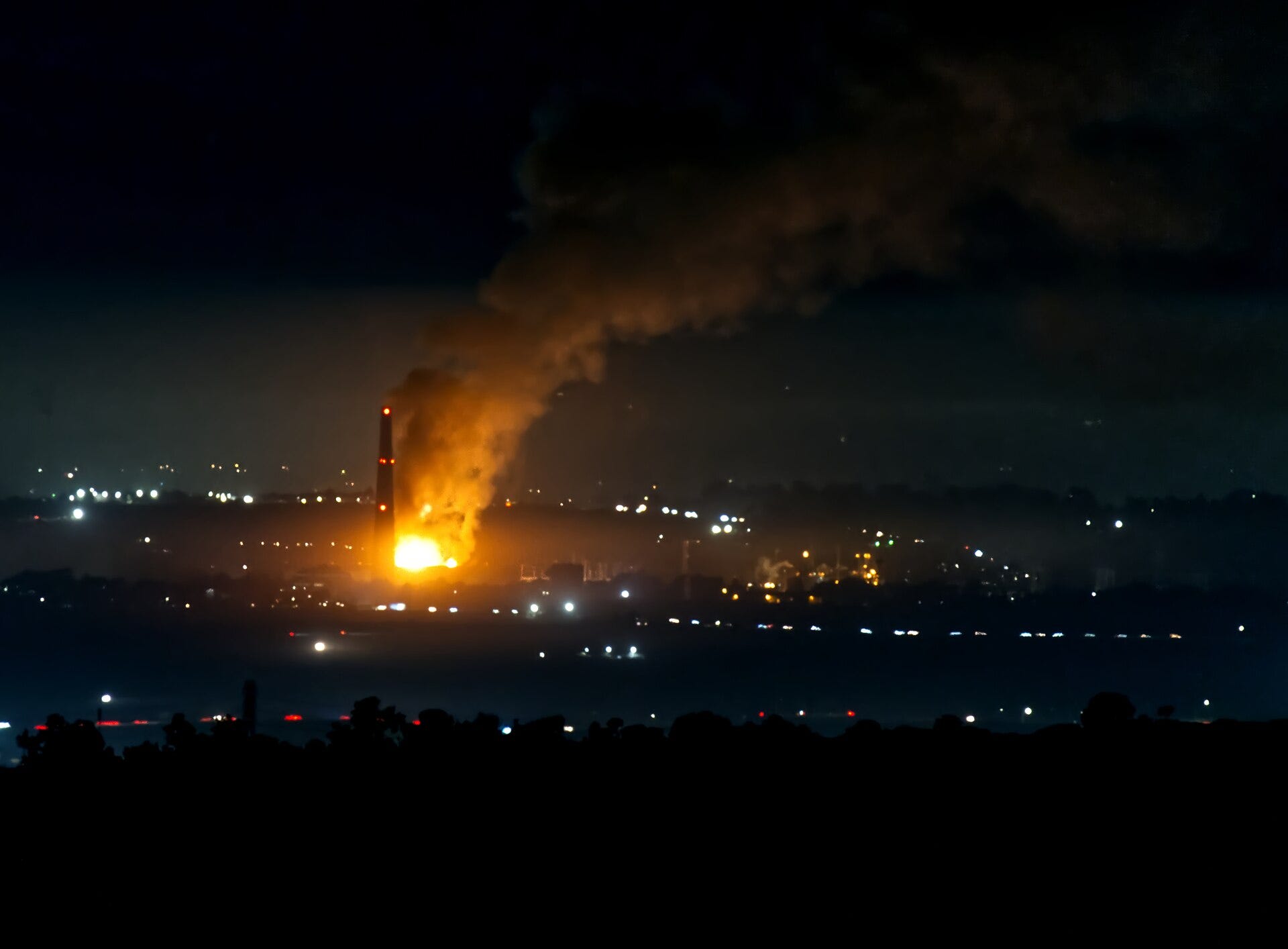
After I posted “Aiming for Protective Conditions—if a developer proposes “green” (solar and/or battery energy storage) facilities near you,” an astute reader clarified that in a capitalist system, a county commission’s job is not to protect the environment or create safety mechanisms. A commission’s job is to move projects forward.
Right.
I guess I let this slip—even though, in 2024, environmental attorney Will Falk explained how federal Acts and agencies support corporations to “take” endangered species legally. Read more about Will Falk, below.
Then, another astute reader suggested I add a section to the post that explains what to do if your county officials permit a lithium ion battery energy storage system (BESS) facility. This observer also clarified that concerned citizens can’t county on local governments or federal agencies to protect the environment or the public. Community groups must create these protections themselves:
Ensure in advance of a BESS fire that your local government has:
1) an evacuation plan. Since BESS fire smoke can travel many miles, coordinate this plan with nearby cities and counties. The plan should include a webpage with easy-to-find emergency and chemical exposure information.
2) a chemical testing plan. Community-hired trainers should explain (in advance of a fire) how to collect hair and surface samples for metals like lead and beryllium after a BESS fire; how to maintain chain-of-custody of materials; and where to send “ghost wipes” and other samples for proper testing. This way, health care providers who treat people exposed to a fire’s emissions will have reliable information.
3) quality, independently verified hydrogen fluoride (HF) detectors deployed around the community—and community members who monitor them. Hydrogen fluoride is a highly toxic chemical gas created when lithium-ion batteries fail, overheat or catch fire. HF can burn skin, poison blood and stop the heart. Even small exposures can cause death. Handling and disposal of used or damaged lithium-ion batteries risks HF exposure to workers and nearby communities.
4) training for first responders, firefighters and reporters who will deal with lithium-ion fires’ HF emissions. Protect your emergency responders!
5) realistic expectations. As with many disasters, after a BESS fire, EPA and other government agencies may provide limited testing and resources. Community members and neighborhood associations should prepare in advance to provide for themselves (and to pay for trainings).
MORE ABOUT WILL FALK AND MAX WILBERT
The Bureau of Land Management has levied a nearly $50,000, fine against Max Wilbert and Will Falk for building composting toilets at Thacker Pass, Nevada on land that a corporation is currently destroying for an 1,100 acre, 400-feet deep open pit lithium mine (for EV and BESS batteries). Max and Will built the temporary toilets for Native elders who visited Thacker Pass in 2021 to pray for their ancestors massacred there. Will and Max need $5000 for a retainer to pay a Nevada attorney—and fight this fine for protesting mining of Thacker Pass. Max and Will Legal Defense Fund.
Elisabeth Robson has posted before and after images of lithium mining to show what remains of Thacker Pass.
BIG TECH MARCHES ON
Citizens Reunited warns about surveillance: They quote Alex Skopic from Current Affairs: “The idea that surveillance is a silver bullet for stopping crime is questionable at best… And even if surveillance did lower crime rates, it wouldn’t justify casting a dragnet of cameras, drones, databases, and AI over an entire city, because the potential for abuse is truly terrifying.” In New Orleans, cameras, AI, location data, predictive policing, commercial databases and more are quietly being stitched together into an infrastructure of continuous surveillance that’s becoming harder to see precisely because it’s becoming normal. Read Skopic’s essay before someone reads you.
Citizens United also reports about “Flock”, the rapidly expanding network of AI-powered license plate cameras quietly watching U.S. roads. Police departments love them. Civil liberties groups and anyone worried about their privacy… not so much. Depending on who you ask, Flock is either the future of public safety or the beginning of a world where every trip to the grocery store, every visit to a protest, every late-night drive and every wrong turn live forever in a searchable database.
To add your name to the campaign calling on Big Tech to pay its fair share and help repair the damage caused by its platforms, sign the petition.
Meanwhile, Santa Fe, NM’s city council just approved a $2.2M program to dispatch drones ahead of—or in place of—police officers.
POPULAR OPINION
A survey conducted by the University of Pennsylvania’s Annenberg Public Policy Center finds that about 3 in 5 U.S. adults (61%) oppose the construction of new data centers near their home—12% more than those who opposed them four months earlier. Americans’ broader views of artificial intelligence (AI), however, have remained stable. The share saying that AI’s impact on the U.S. over the next 10 years will be somewhat or very negative was 39%, statistically unchanged from the spring. Two-thirds (68%) continue to say the government has done “too little” to regulate AI, unchanged from the spring. Meanwhile, Americans who use AI regularly take a markedly less negative view of what it will do to the country.
LANDLINES
CenturyLink moving Colorado landline phone customers to a wireless option, sooner or later. Verizon has filed to discontinue plain old telephone service (POTS) across 1,419 cities in Frontier/Citizens territory. If you aim to keep your landline, ask your state’s League of Municipalities for support. And maybe share that when thousands of Verizon’s mobile and Internet customers lost power around the U.S. on August 8th (exactly numbers and the problem’s origins not named), POTS customers had no problems.
HOLDING META RESPONSIBLE
On August 6, in State of New Mexico v. Meta Platforms Inc., Santa Fe, NM’s First Judicial District Court found that Meta created a public nuisance by contributing to our youth mental health crisis and by facilitating child sexual exploitation. It ordered Meta to pay $567 million to create an abatement fund to address the harms to the public.
Judge Bryan Biedscheid also ordered the company to change how its platforms treat underage users. The judge mandated that Meta restrict how much time minors can spend on apps each month and prevent push notifications from being sent to their phones between 10 pm and 7 am. Meta said it plans to appeal.
Nathaniel Lubin, an expert witness in the case and founder of Better Internet Initiative wrote that with this ruling, for the first time, a social media platform was found to have created a “public nuisance.” The finding, he writes, establishes that platforms may be held responsible for their products’ effects.
Would you buy me a cup of tea each month and upgrade to paid?
Thanks for the correction!
you're welcome...as a writer/editor i can't help noticing stuff like that. Would make a good bumper-sticker though "don't county on local governments"😂